CALL (503) 822-7567
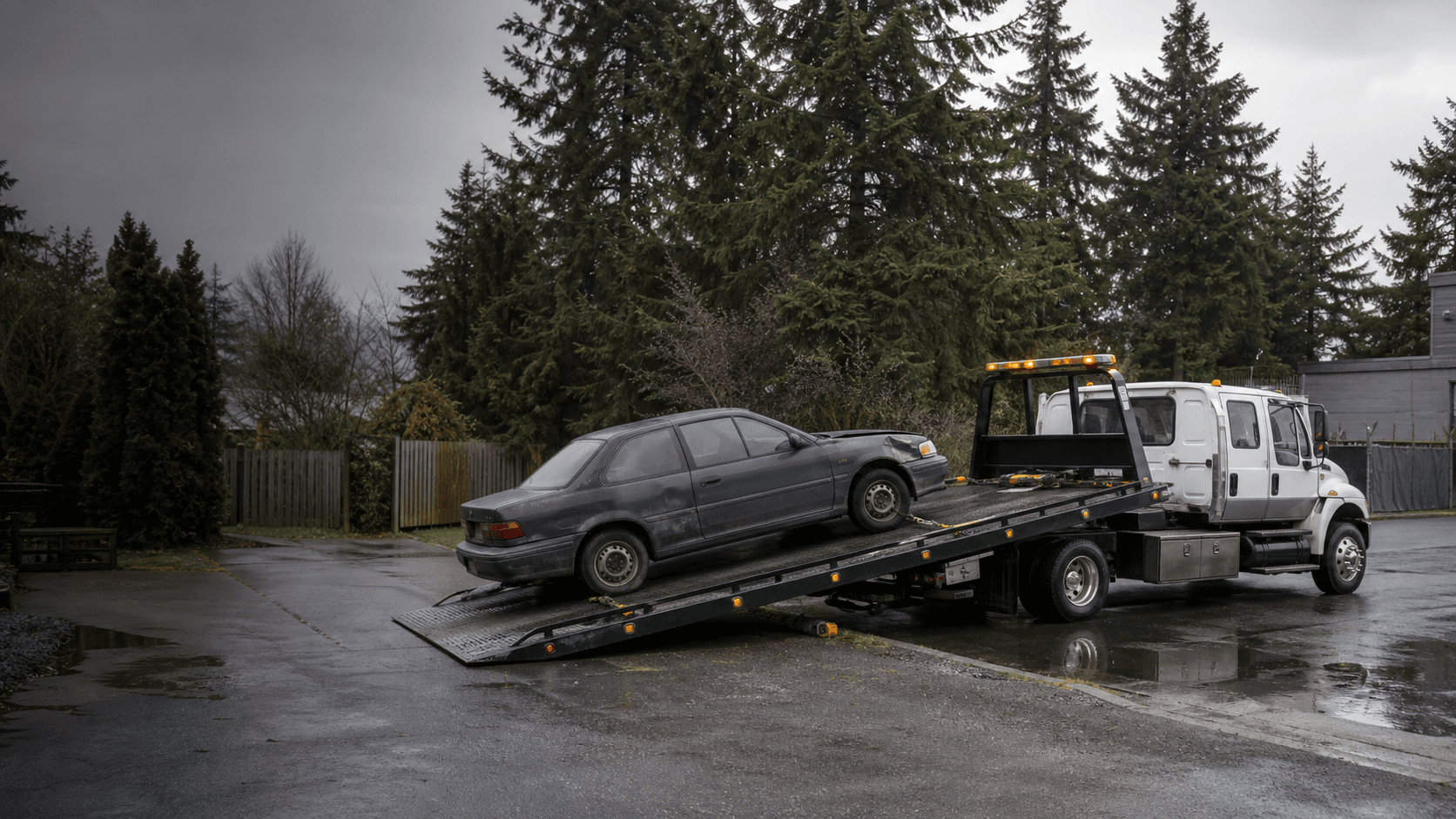
Older damaged car prepared for Oregon pickup: Checking a Junk Car Buyer

PICKUP AND SAFETY

How to Check an Oregon Junk Car Buyer Before You Sign Anything

Oregon licenses the businesses that buy vehicles to dismantle, and the license carries a bond you may have a right of action against. How to check, what should end a conversation, and where to complain if one goes wrong.

14 min readUpdated September 8, 2026By CashMyCarOregon

We buy cars, and this is a page about how car buyers cheat people. You should read it with that in mind.

So it is built to be useful even if you never call us. Every test below is one you can apply to any buyer in Oregon, and most of them are answerable in a sentence.

The reason that is possible is that Oregon does not leave this to instinct. It licenses the businesses that buy vehicles to take apart, and the license carries a bond. That turns the question from one you cannot answer, do these people seem honest, into one you can, what is your certificate number.

QUICK ANSWER

Under ORS 822.100 a person may not perform the actions of a dismantler in Oregon without a certificate issued under ORS 822.110; doing so is a Class A misdemeanor and carries a civil penalty of up to $5,000. A certificate requires an approved place of business — zoned for industrial use, or under another classification that permits the business — and a bond, and ORS 822.120 sets that bond at $100,000, with a right of action for any person who suffers loss through a violation. So ask a buyer what their dismantler certificate number is. Not every lawful buyer is a dismantler — scrap metal businesses are defined out of it — so ask what they are, and expect a straight answer either way.

01

Our conflict of interest, stated plainly

There is an entire genre of this article written by cash-for-cars companies, and it follows a pattern: a list of frightening behaviors, none of which the author engages in, ending with a phone number. Two of the results on page one for this search are that article.

The problem is not that it is false. Fake cashier's checks are real. The problem is that a list of other people's sins from an interested party is worth nothing to a suspicious reader, and the reader arriving from a Facebook group thread is right to be suspicious.

So this page does something different. It gives you the check that Oregon law already provides, which does not depend on our opinion of anyone, and it does not ask you to take our word for anything in it.

02

The check that beats any gut feeling

Oregon regulates this trade, which most sellers do not know.

ORS 822.100 makes it an offense to perform the actions of a dismantler without a valid, current dismantler certificate issued under ORS 822.110. It is a Class A misdemeanor, and the Department of Transportation may impose a civil penalty of up to $5,000.

Getting that certificate is not a formality. Under ORS 822.110 the applicant has to establish that the place of business is zoned for industrial use or under a classification that permits the business, pay the fee, complete the application, deliver any local government approvals, and post a bond or letter of credit. The certificate attaches to an approved location, which is why a legitimate operation can tell you where its yard is.

The bond is the part worth knowing about. ORS 822.120 sets it at $100,000, and gives any person a right of action against both the certificate holder and the surety on the bond where that person suffers loss or damage by reason of the certificate holder's violation of the statutes governing dismantling and salvage.

Read that carefully, because it is a real protection and not an unlimited one. It is tied to a violation of those statutes, not to your general dissatisfaction with a price. But it means a licensed buyer has something at stake that an anonymous truck does not, and it means there is somewhere to go if things go wrong.

  • Operating as a dismantler without a certificate: Class A misdemeanor
  • Civil penalty of up to $5,000
  • The certificate requires an approved location zoned to permit the business
  • The bond is $100,000 under ORS 822.120
  • Any person harmed by a violation may act against the holder and the surety

03

Two things this test does not mean

Not every lawful buyer holds a dismantler certificate. ORS 801.236 defines a dismantler as a person engaged in the business of buying, selling, dealing in or processing vehicles for destruction, salvage, dismantling, crushing, recycling and the like, or dealing in major component parts held as inventory — and it excludes scrap metal businesses. A scrap processor is a different animal under a different part of the law. So the right question is open rather than leading: what are you, and what are you licensed as? A real business answers that immediately. It is the hesitation that tells you something, not the category.

And you are not a dismantler. The definition turns on being engaged in the business, so selling your own car, or two of them, does not make you one. Nothing here is a warning aimed at you, and no legitimate buyer should suggest that you need any license to sell a vehicle you own.

And since this page tells you to ask, here is our own answer. CashMyCarOregon does not hold a dismantler certificate, and does not run a wrecking yard. We are a car-buying platform and a broker: the towing, the title processing and the actual dismantling are handled by a network of third-party licensed operators — local partners, scrap yards and salvage auctions. Those operators are the entities Oregon requires to hold and display a valid dismantler certificate. We are not one of them.

Which operator handles your vehicle depends on where you are and what the job is, so there is no single number for us to quote. The question that works across a network is the one to ask before the truck is booked: who is coming, and what are they licensed as? That points you at the business the bond and the right of action under ORS 822.120 actually attach to — which is never the broker. If anyone tells you CashMyCarOregon itself is the certificate holder, that is wrong.

It also sharpens the open question from earlier on this page. A scrap yard, a salvage auction and a dismantler are three different things under three different parts of the law, and a network can involve all three. That is why what are you licensed as beats are you licensed — the second invites a yes, and the first invites an answer you can check.

04

Behaviour that should end the conversation

These are the specifics. They apply to every buyer in Oregon without exception, and they are worth reading before you speak to any of them.

A price quoted before anyone asked what the vehicle is. A real offer depends on the model, the condition, whether it rolls and where it is standing. A number produced before those questions is a number designed to be reduced later.

The price changing on arrival. This is the defining move of the trade. It works because the truck is there, your afternoon is gone, and a lower number feels better than starting again. The defence is not cleverness, it is having the conditions stated before the truck is booked — and being willing to say no on the driveway, which is easier if you decided in advance that you would.

Asking you to sign the title with the buyer's section blank. Never do this. A signed title with an open assignment is a vehicle that can be moved on without your name ever appearing, which is the mechanism behind title jumping and behind cars that stay legally yours long after they leave.

Wanting the signed title before you are paid. Payment and paperwork happen together. There is no legitimate reason for the order to be otherwise.

No business name, no address, no certificate number. Someone who will not say who they are on the phone will be no easier to find afterwards.

Free towing that becomes a deduction. If towing is free, it is free at the door. If it is deducted, then it was priced in, and you should have been told which.

Pressure to decide now. Nothing about a car that has sat for two years requires a decision in ten minutes. Urgency is a technique.

Silence about the notice of sale. A buyer who does not mention it is either careless or content for you to stay on the record. Either is a reason to look harder.

05

The remote scams, which are a different animal

Everything above is about a buyer who turns up. The scams that dominate community threads mostly involve one who does not.

The overpayment pattern is the durable one: a buyer sends a cashier's check or a transfer for more than the agreed price, apologizes for the error, and asks you to return the difference. The original payment fails days later, after your bank has made the funds available and after you have sent real money. The refund request is the tell, and it is the tell every time, whatever explanation accompanies it.

The others rhyme with it. A shipping agent who needs a fee first. A buyer who wants the title posted ahead of payment. A payment app screenshot that is only a screenshot. Any arrangement where money leaves you before value arrives.

The rule that covers all of them: for a junk vehicle in Oregon, you should not be paying anyone anything. Money moves toward you. Any request that reverses that direction, for any stated reason, ends the conversation.

06

Close the ownership loop, because that is where the cost lands

The worst outcome of a bad sale usually is not the money. It is a vehicle that is still yours on paper.

File the notice of sale within ten days. It is the record that you transferred the vehicle and when. Until it exists, DMV's record still points at you, and what happens to that car — where it is parked, whether it is abandoned, how it is driven — points at you with it.

Keep your own copy of everything: the release you signed, the odometer statement if one applies, the buyer's details, and the date. If a dispute ever reaches DMV, the DOJ or a bond claim, that file is the difference between a version of events and a record.

And decide about the plates before the truck arrives. Oregon DMV says you may remove your plates before selling, and ORS 803.530 otherwise leaves plates with the vehicle they are assigned to — so this is a choice, not a rule. For a car being scrapped rather than driven away there is no reason to leave them on, and anything they stay associated with stays associated with you.

07

If it goes wrong

There are three routes, and they are for different problems.

DMV Business Licensing handles the certificate itself — an operator working without one, or from an unapproved location.

Oregon DOJ's consumer protection division takes consumer complaints on the hotline, 1-877-877-9392, and online at justice.oregon.gov/consumercomplaints. Its complaint database is public and searchable, which also makes it a place to look before you sell rather than after.

The bond, where a certificate holder's violation of the dismantling and salvage statutes caused you loss. This is the route people do not know exists, and it is the reason the certificate number is worth asking for at the start rather than looking for at the end.

FREQUENTLY ASKED QUESTIONS

Are junk car buyers legit?

Many are, and Oregon gives you a way to check rather than guess. A business that buys vehicles to dismantle needs a dismantler certificate under ORS 822.110, tied to an approved location — zoned for industrial use or under another classification that permits the business — and backed by a bond. Operating without one is a Class A misdemeanor with a civil penalty of up to $5,000. Ask for the number.

Does CashMyCarOregon hold a dismantler certificate?

No, and we do not run a wrecking yard. We are a car-buying platform and a broker: towing, title processing and dismantling go to a network of third-party licensed operators — local partners, scrap yards and salvage auctions — and those operators are the ones Oregon requires to hold and display a certificate. Which one handles your vehicle depends on your location and the job, so ask who is coming and what they are licensed as, before the truck is booked. Anyone telling you CashMyCarOregon itself is the holder is wrong.

How do I check an Oregon junk car buyer?

Ask what they are licensed as and for the certificate number, and ask where the yard is, since the certificate attaches to an approved location. Then ask what the offer depends on before any truck is booked. A real business answers all three quickly; hesitation on any of them is the signal.

What is the dismantler bond, and does it protect me?

ORS 822.120 requires a bond or letter of credit of $100,000. Any person who suffers loss or damage by reason of the certificate holder's violation of the dismantling and salvage statutes has a right of action against both the holder and the surety. It is real, and it is bounded: it follows a violation of those statutes, not general dissatisfaction with a price.

Does every legitimate buyer hold a dismantler certificate?

No. ORS 801.236 defines a dismantler as a business dealing in vehicles for destruction, salvage, dismantling or recycling, or in major component parts held as inventory, and it excludes scrap metal businesses. So ask an open question — what are you, and what are you licensed as — rather than assuming one answer is the only lawful one.

Do I need a license to sell my own junk car?

No. The definition turns on being engaged in the business, so selling your own vehicle does not make you a dismantler. If a buyer suggests you need a permit or license to sell a car you own, that is itself a warning sign.

The buyer lowered the price when the truck arrived. Is that normal?

It is common, which is not the same as acceptable. It works because the truck is there and starting again feels expensive. The defence is to have the conditions of the offer stated before the truck is booked, and to decide in advance that you are willing to say no on the driveway.

Why should I never sign a title with the buyer's section blank?

Because an open assignment lets the vehicle move on without the next owner's name ever appearing. That is the mechanism behind title jumping, and it is how a car stays legally connected to you long after it has left. Fill in the buyer, or do not sign.

What is the overpayment scam?

A buyer sends a cashier's check or transfer for more than the agreed price, calls it an error, and asks you to return the difference. Their payment fails days later, after your bank has released the funds and after you have sent real money. The refund request is the tell every time, whatever explanation comes with it.

Should I ever pay a junk car buyer anything?

For a junk vehicle in Oregon, no. Money should move toward you. Any request that reverses that direction — a shipping agent's fee, a release fee, a deposit to secure a pickup — ends the conversation regardless of the reason given.

What happens if I do not file the notice of sale?

DMV's record keeps pointing at you, and so does what happens to the vehicle: where it is parked, whether it is treated as abandoned, how it is driven. Filing within ten days is the record that you transferred it and when, and it is the cheapest protection in the whole process.

Where do I complain if a buyer cheats me?

DMV Business Licensing for the certificate itself, such as an operator working without one or from an unapproved location. Oregon DOJ consumer protection on 1-877-877-9392 or at justice.oregon.gov/consumercomplaints for consumer complaints. And a claim against the dismantler's bond where a violation of the dismantling statutes caused you loss.

Can I check a buyer's complaint history before selling?

Oregon DOJ maintains a public, searchable consumer complaints database, so it is worth a look before a sale rather than after. Community threads on Reddit and local Facebook groups are also where Oregon sellers report this behaviour first, and they name specific operators.

PRACTICAL CHECKLIST

Before a buyer arrives

  • Ask what the business is licensed as, and for the certificate number
  • Get the conditions of the offer in writing before a truck is booked
  • Never sign a title with the buyer's section blank
  • Do not hand over the signed title before you are paid
  • Confirm whether towing is free at the door or deducted
  • Refuse any arrangement where money leaves you first
  • Decide about the plates before the vehicle goes — DMV says you may remove them
  • File the notice of sale within ten days and keep a copy of everything

JUNK-CAR SERVICE AREAS FOR THIS GUIDE

USEFUL OREGON RESOURCES

OFFICIAL SOURCES

Rules, forms, fees, and program eligibility can change. Use these primary sources to confirm your situation.

Prepared and reviewed on September 8, 2026 against ORS 822.100, ORS 822.110, ORS 822.120, ORS 801.236 and Oregon DOJ's consumer protection pages. Statutes, bond amounts and penalties change; confirm current text on oregon.public.law or the Oregon Legislature site before relying on it. General information, not legal advice. We are a vehicle buyer writing about vehicle buyers, and the conflict is stated in the first section rather than buried.

Reviewed by CashMyCarOregon Editorial Team: Oregon seller-document research and editorial review

RELATED OREGON GUIDES

How to Sell a Junk Car in Oregon: The Complete Seller Guide

Read guide

The Oregon DMV Notice of Sale: A 10-Day Checklist for Sellers

Read guide

Oregon Vehicle Bill of Sale: A Guide for Junk-Car Sellers

Read guide

SELLING THE CAR AS-IS?

Start your Oregon cash offer.

Enter the Oregon ZIP, required VIN, and mileage. NHTSA identifies the vehicle before the pickup questions.

Get My Cash Offer